Mission
I want to make it easier for people to learn. I want to make it free as in speech or thought,1 free as in beer,2 and free as in people.3
Why
Education the bottleneck of civilization.
How well do we teach the children of each generation? How many Newtons, Einsteins, Gödels do we miss, every century?
Education is a ladder that offers a “way up” for all minds, rich and poor, gifted and “normal” alike. The broader, sturdier, and gentler the ladder, the more learners who will be entreated to make and sustain the climb.
And the larger and more numerous the mass of climbers, the more quickly and steadily the center of humanity’s mass makes it up, as well.
It’s an existential promise.
With this framing in mind, there are quite a few areas in which current systems suffer obvious and serious limitations. Some of the problems I see with learning today are an issue of efficiency. Education is childcare first, indoctrination second, and invitation to learn a distant third. This is emergent, and it is the status quo.
I don’t propose to replace the current education system. That’s been tried, and I think it’s suicide by suffocation. Not going to happen. What I can hope to achieve is as follows:
- Build tools to make learning “free,” as described above
- Make those tools as drop-in as possible, both as a non-threatening augment to existing systems (to relieve burden, improve outcomes, and impress parents), and as replacements or alternatives to existing systems (especially for continuing education, such as post-high school and post-college)
- Advocate
- for school choice
- for parental education and empowerment (about outcomes and lifetime value)
- for student engagement (through direct-to-consumer targeting)
That is probably as much as I have it in me to do, for this lifetime. If I even make it that far, I should probably be sick of education and its ills, by then. At best, I will have made an impact and forged some tools and groundwork for others to pick up the torch. At worst, I will have built some tools that I and perhaps my children will use, and I’ll have had a fun time trying to make a difference along the way. Cautionary tale, and all that.
Context
Students aren’t allowed or encouraged to ask “why are we learning this?” And even when they do, it’s often hard for them to relate that back to what they’re learning.
“Oh, it helps with XYZ.” “Oh really? How?” “It’s complicated. You need to learn it first…”
It would be ideal for them to be able to ask these questions and get satisfactory answers, whenever and as often as they want to. It would be ideal for other students to be able to see and participate in these conversations, too. One of the best feelings you can have, especially when you’re struggling (and learning is a struggle—it just doesn’t have to be a painful struggle) is that you’re not alone.
Asking these kinds of questions in public and getting useful answers and not feeling guilty for derailing the class is exactly a good way to do that for yourself and others. And classes these days just don’t have enough free space and teacher resources to make that possible at any meaningful scale. It’s a non-starter, basically.
Self-pacing
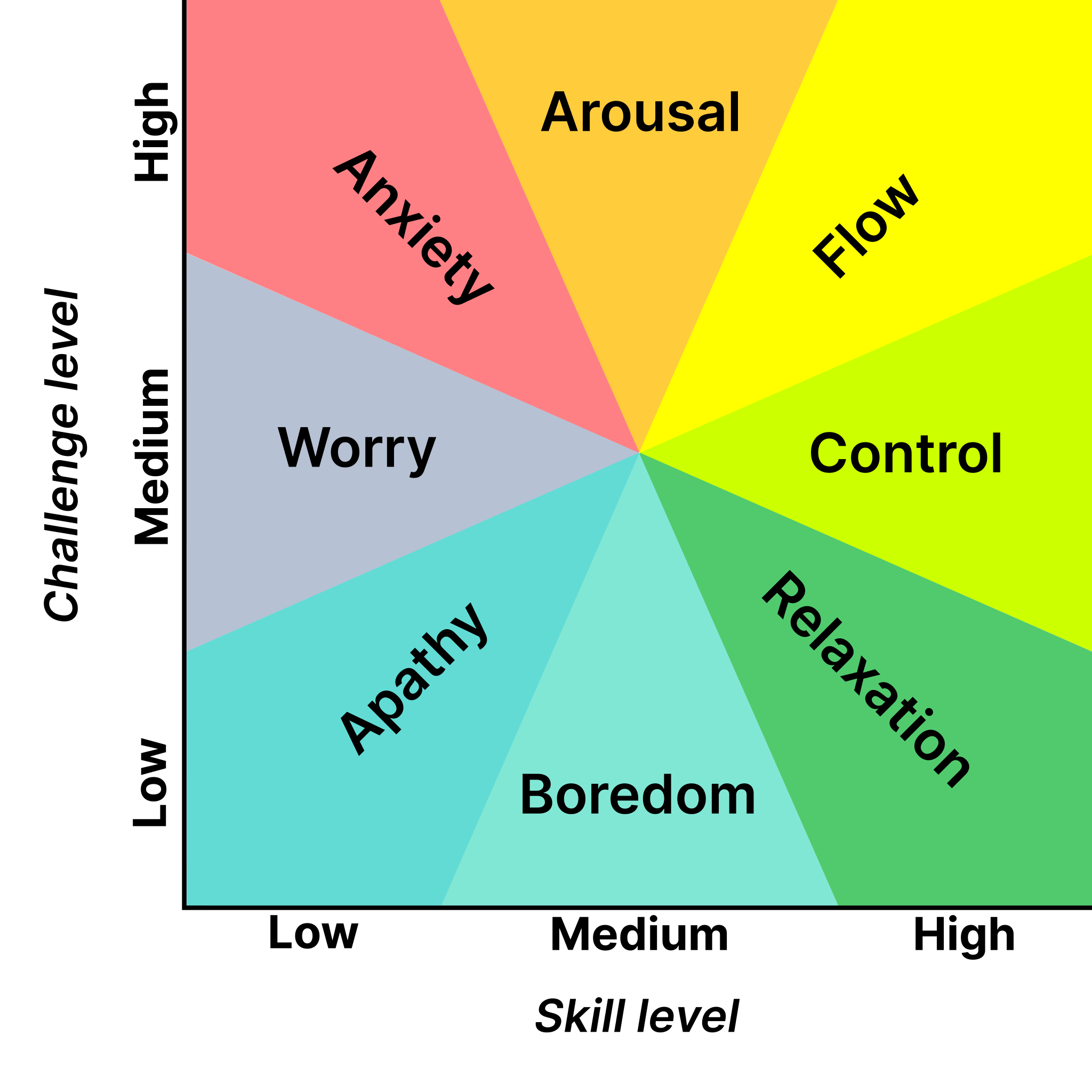
Classes have to move at the least common denominator pace. For most students, that’s either slower or faster than they would like. Either way, it’s discouraging. The alternative is to create looser cohorts with milestones and allow students to traverse through those milestones at their own pace. Some students will leave cohorts behind, and end up waiting at the “finish line.” Not a big deal. Others will drag forward at a leisurely but sustainable pace. Also fine.
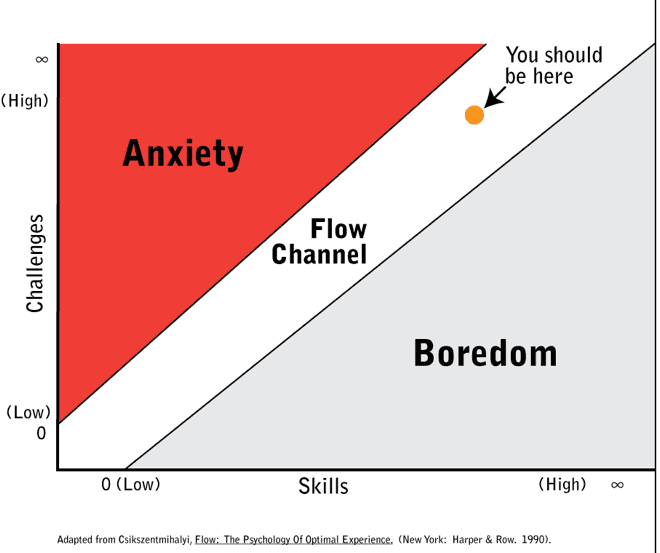
Here’s another good one that highlights different channels.
Cross-subject connections
Most courses are so rigidly defined that students are not empowered to cross-apply knowledge from one subject to another. They can, and they certainly do. But, they’re largely encouraged to think of and approach the subjects separately.
This is in stark contrast to the real world, in which most good work involves multidisciplinary efforts from a variety of richly trained individuals.
Why are we training our kids to think of disciplines as separate and non-fungible? They should be encouraged to find overlap and utility across their classes. They should have only one class, honestly.
Production and output.
Students are invited to do homework, which is throwaway work that doesn’t get revisited, added to, or used in any way.
Obviously, homework is necessary, and when the student knows nothing, there’s not much they can do. But, I also think that these curricula suffer from the context problem, and so homework becomes throwaway stuff that doesn’t build on the work students have already done.
On the contrary, in the real world, we often do a lot of “throwaway” work that actually leads towards eventual success. We aren’t instructed well that this is actually a good and necessary formula, so we lament the “throwaway” work and ourselves for not coming up with the right solution off the bat, rather than carefully documenting and sharing our learning for others to see and learn from as well.
An effective curriculum that prepares students for real-world success would recognize and leverage this process in practice. Students would be encouraged and incentivized to keep track of their progress.
Some teachers do this, by letting students use their notes on exams, etc. But, what if we took it a step further? What if we let students redo their homework for credit? What if we made students redo their homework, to fix and improve it? What if they couldn’t get full credit in a class until they got all of the problems right? Would that train them to feel comfortable going back and fixing errors, rather than shrugging them off and thinking to themselves, “eh, good enough”?
Categories
- Language tutoring
- Corporate and HR training
- Skills training
- Online learning/training
Research questions
- Why do textbooks cost 200, and $300? 1
Related reading
Other actors
…
Ideas
- …
Footnotes
-
Free speech means no restrictions from a political/governmental or ideological perspective. There should be no knowledge off limits, and no lines of inquiry that are forbidden. To make this possible, we have to build tools for responsible, guided inquiry. When people are asking dangerous questions, we have to let the pursue them, but we must enrich the answers with a full, comprehensive view of the consequences and implications of each conclusion. ↩
-
Free beer means there’s no cost paid by the consumer. The implications of offering something for free are important to consider, as there is no free lunch. ↩
-
I don’t have a good term for this, but it basically means no imposition of direction or influence. People are “free” to self-actualize (though, in reality, there are plenty of restrictions and impositions upon them, from the social structures they exist within, to the very words they use to qualify their thoughts and experiences). ↩